
Accounting Excellence alumni flinder and Next Level Business have announced they are merging to create the new group called Ascendant. The founders of each firm recount how the deal came together.
It’s almost like Next Level Business and flinder were destined to merge. When I caught up with Alastair Barlow, the co-founder of flinder, and Paul Layte, the founder of Next Level Business, they were trying to remember the first time they met. The likely date was 12 September 2019 – the night of the Accounting Excellence Awards.
Call it kismet, serendipity or whatever, but that was the night Next Level Business picked up Small Firm of the Year and flinder pulled off a hat-trick, winning gongs for New Firm of the Year, Fast-Track Firm of the Year and Innovative Firm of the Year. It’s like the paths of the two firms were forever entwined from that night.
Fast-forward five years and the stars aligned again. Earlier this month, flinder and Next Level Business announced that they were joining forces as a new group to target the outsourced business finances sector. Layte quipped that it’s a bit like “bringing the Avengers together”. Together under the banner Ascendant, the group have combined revenues of £4m and 200 clients.
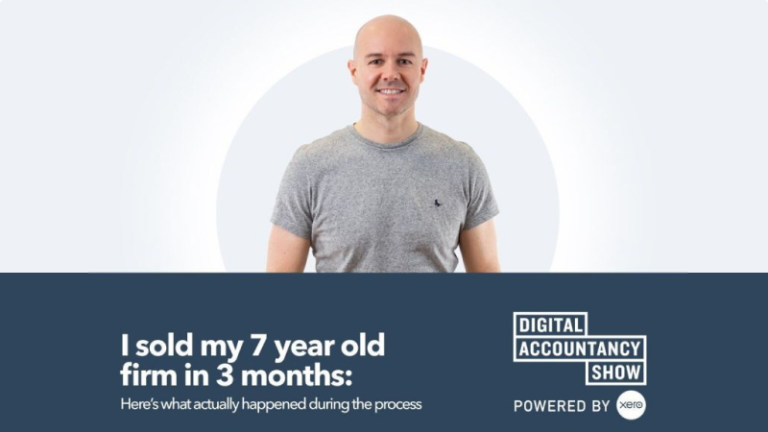
Under the new group, Layte has moved into the role of group chief commercial officer at Ascendant, where he sits on the main board and is essentially the accountant of the group. Meanwhile, Barlow has taken a consultant role with Ascendant where he will support the group with acquisitions, with his co-founder Luke Streeter stepping into the CEO role for finance as a service.
How the deal came together
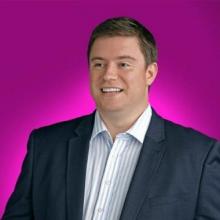
The partnership first started brewing around 18 months ago. Barlow remembers taking a phone call out of the blue from Layte in the summer of 2023. Initially, Layte (pictured below) wanted to gauge Barlow’s opinions on the current lay of the land in the market.
“Paul was coming from the perspective of, ‘Do I go left or do I go right? Do I sell or do acquire?’ At the same time, we, as flinder, were having the same thoughts as well. We didn’t really get to any conclusion,” said Barlow.
Things then went quiet until around five months ago when Barlow’s phone rang again. “This time it was a little different,” recalled Barlow. Layte had decided that he was going right. Something had come across his desk and it read like flinder. That’s when the conversation started to get a little more serious about the future.
“When you’re doing what Next Level Business and flinder were doing, it’s very difficult to see a home for yourself in a more traditional firm,” said Layte. “Both of us felt that you get to a certain stage of a multi-million pound firm and you start thinking, no practice owners with only one or two partners get to the multi-million-pound size. Not many are able to do that from scratch.
“We both agreed that we wanted to achieve so much more. Especially in the finance-as-a-service space, we wanted to go deeper and bigger. So if you’re a multi-million-pound firm, the question I considered was, how do you become an eight-figure firm?”
This is a topic many ambitious firms grapple with. Do you try to go it alone? Should you join forces with someone else? Should you look to become acquired? Or, should you acquire? Layte found it difficult to find the information or even find the people who have gone through the process. Hence the call to Barlow in the summer of 2023.
But after weighing up his options, Layte had decided which way he was going. He was going to create the group that focused on finance as a service and he wanted flinder to “join the party”.
“We’ve got the same ethos, similar teams and similar clients – we’re similar in more ways than we are different. It made perfect, strategic sense,” reflected Layte.
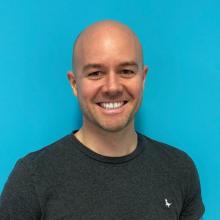
Unbeknownst to Layte, Barlow (pictured below) was having similar thoughts. At the start of the year, he and Streeter had decided that they too were looking for the right transaction. They had previously leaned the other way, but after reviewing everything, they finally decided they wanted to find the right home for flinder, their team and their clients to help drive towards their vision.
“I spoke to a lot of people, and they kind of rolled out the same playbook. And it was built on the foundations of a traditional accounting firm, not an innovative, exciting place for our people to be,” said Barlow.
“I couldn’t see a future vision or a focus on finance as a service, or smart finance function or what we have in our DNA – the kind of the cultural brand that we have with our people and the ethos that we have with our clients.”
Both Barlow and Layte felt like they were talking the same language. They use the same technology. And they have the same vision. “Having the platform and the foundations for future acquisitions and growth was just way more exciting than anything we had come across.”
Funding
The accountancy market is very attractive at the moment. There is a lot of private acquisition money sloshing around. Hardly a week goes by without some announcement of a larger fish snapping up a smaller one, backed by private equity.
While Ascendant is privately funded, they’re not currently backed by private equity. As Layte explained, “We don’t want to take advantage of that in a way that means that we can’t execute our vision and our business plan. We’re being very thoughtful about who specifically, you know, we would like to get involved. It’s more a case of who’s got the right mindset to run with this. Because we are doing something a little bit different in our model.”
The group is on the lookout for more firms to join. In particular, they recognise that they have strengths in certain industries, such as e-commerce, software as a service (SaaS), and technology and services, but they’re also looking to add industry specialisms.
What they’re offering is what they call a collaboration model. For example, at Ascendant, they’re happy to leave equity in the hands of former firm owners, which they said wouldn’t necessarily be on the table with traditional private equity roll-up firms.
“We are looking to have the best of both worlds [with acquired firms], which is to work together on a common vision and strategy, to invest in expertise, staff and technology, while also letting them participate in the future success of the group at the same time.”
The friction of mergers
Currently, both the flinder and Next Level Business brands are still being used but as Layte said, “Ascendant is the mother ship” and the plan is to move forward with that brand.
All of the teams and clients will be under one roof and everyone is on the same payroll, so while they recognise all of the accomplishments and accolades both firms have individually achieved, Layte emphasised that they’re one team regardless of whether they retain trading brands for commercial reasons or not.
When flinder announced the deal to their team a couple of weeks ago, one of the team asked the same question about the future of the brand. Pointing to the distinctive flinder logo on the wall, Barlow responded: “That is a visual identity, it’s not a brand like you. You as the team are the brand – the way you operate, the way you talk and the way you deal with clients. That is the brand and it lives on.”
And there’s the rub – mergers are often beset by friction and conflict when it comes to combining together the cultural fit of two different firms. Layte and Barlow had referred to the two firms as “kindred spirits”, so going into the first round of discussions they knew they were both singing from the same accounting hymn sheet.
“You as the team are the brand – the way you operate, the way you talk and the way you deal with clients. That is the brand and it lives on“
“It starts from the very first meeting,” said Barlow, explaining that cultural fit, people and technology alignment were some of the “barriers to a deal not happening”.
But before there was any ink on the paper, there were integration meetings. “Other groups focus on the deal first and then consider how the two firms fit together, but we’re definitely focused on fit and plan. If that works then we can make a deal,” said Layte.
“I think sometimes in the other private-equity-backed roll-up firms, certainly from the conversations I had, it was kind of, ‘Let me tell you about our big accounting firm and the deal that we could do with you’ rather than, ‘What’s the plan when we get together and do we actually fit?’
“We are all accountants, but that doesn’t mean we do the same work on a day-to-day basis. So before we decided anything, we sketched out what the fit and what the plan could look like. And that was really the motivator then to be able to get a deal done. Our ethos is, if we’re not better together then we might as well stay apart.”
Outsourced finance director
The group is clearly in an acquisitive mood and they see the outsourced business finance service sector as a fertile market to do this.
“The demand is there for something more than just compliance,” said Layte. “Small but meaningful in size businesses don’t have the ability to attract the best talent. They can hire one or two finance people but it’s costly, especially after businesses have been hit with a national insurance increase for all their staff.
So while most small businesses don’t need and can’t afford a full-time CFO, they need what a CFO can do. What we’re giving them is world-class finance support on a fractional basis.”
Currently, Ascendant has five CFOs and 50 team members, with experience in different aspects of running a business. “It’s like accounting 2.0,” said Layte. “Everyone wants to advise and add value, but a lot of accountants are only spending 5–10% of the time on advisory and the rest is spent doing compliance.”
He added, “If all scaling small businesses had this kind of support, they would almost certainly be more successful, and the more successful SMEs are, the more successful UK plc is.”
The outsourced business finance service – or virtual finance director (FD) or fractional CFO, depending on who you talk to – is one of the fastest-growing parts in accountancy. The trend has accelerated in recent years for the reasons Layte highlighted.
And as Barlow noted, “The accounting profession is a very fragmented market at the moment with over 40,000 firms, so the finance as a service space is obviously less fragmented because it is new and there are few firms doing it properly.”
It’s no wonder then that we’ve seen a sharp rise in Accounting Excellence finalists adopting these services. Recent research into the 2024 finalists across the firm categories found 60% claiming to provide some form of fractional FD service. Most of the offerings centred around outsourced bookkeeping and management accounts, a growing number expanded into other services like cashflow forecasting and management, credit control, strategy, growth and funding advice.
So as the movement takes root with high-performing and fast-growing firms, perhaps flinder and Next Business Level won’t be the only two Accounting Excellence Award-winning firms to join Ascendant.
Asked whether fate may strike again under the Accounting Excellence disco ball – like that fortuitous night in September 2019 – Barlow quickly slipped comfortably into his new acquisition consultant role and advised those firms: “Get in touch if you’re interested in joining the rocket ship!”